

-
Go to /localCA directory and create a text file message.txt and enter any value in it.
|
›_ Console |
|
-
Sign the message.txt file using the sender’s private key
|
›_ Console |
|

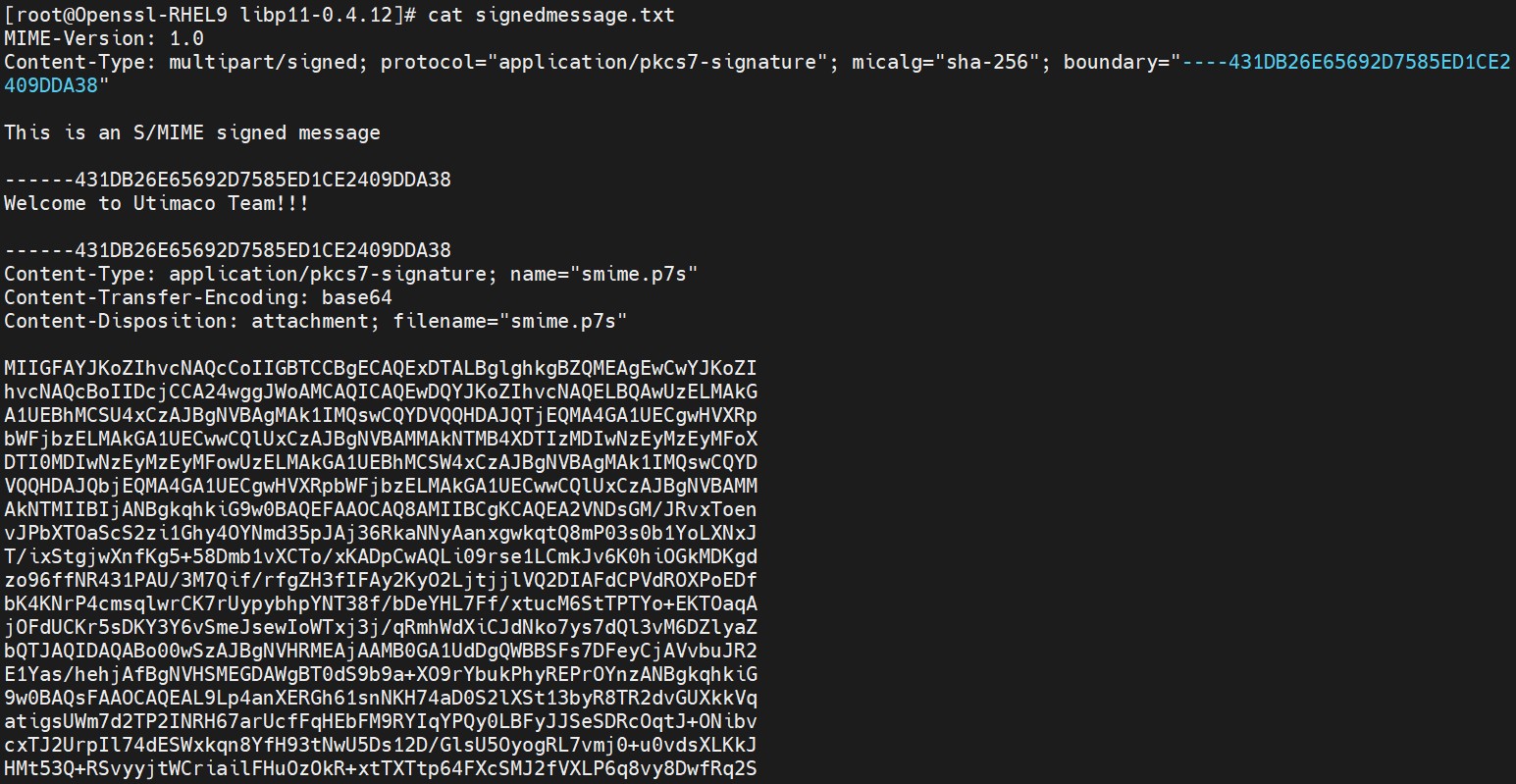
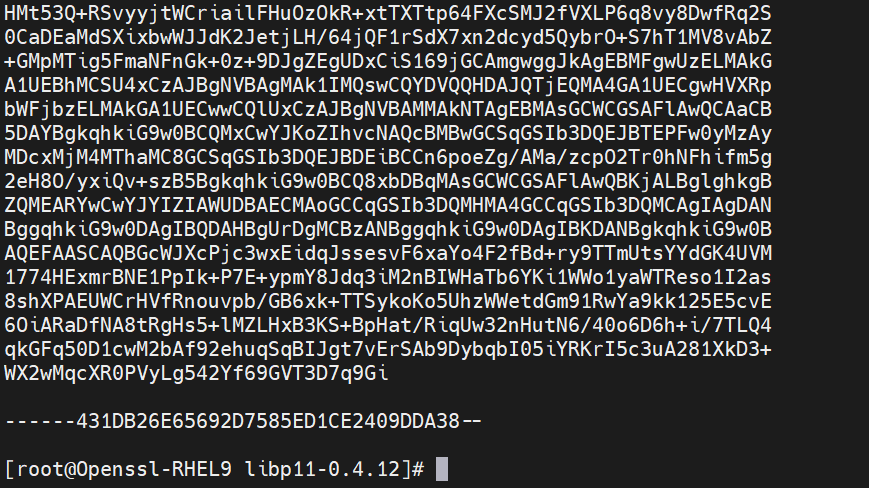
Figure 30: Openssl sign command output and content of signed message file
Here SSLCert1 is the token label and SenderKey is the key on the HSM. Provide Cryptouser PIN when prompted.
-
Encrypt the signedmessage.txt using the receiver’s public key, supplied with the receiver’s certificate
|
›_ Console |
|

Figure 31: Openssl encrypt command output
Using ECC key, only sign and verify operations can be performed with OpenSSL3.Encryption and decryption operation are not supported in this version for ECC Key.