

-
Generate the RSA key using p11tool2.
|
›_ Console |
|---|
|
-
Verify that the keys are generated onto the HSM using following command.
|
›_ Console |
|---|
|
Example:
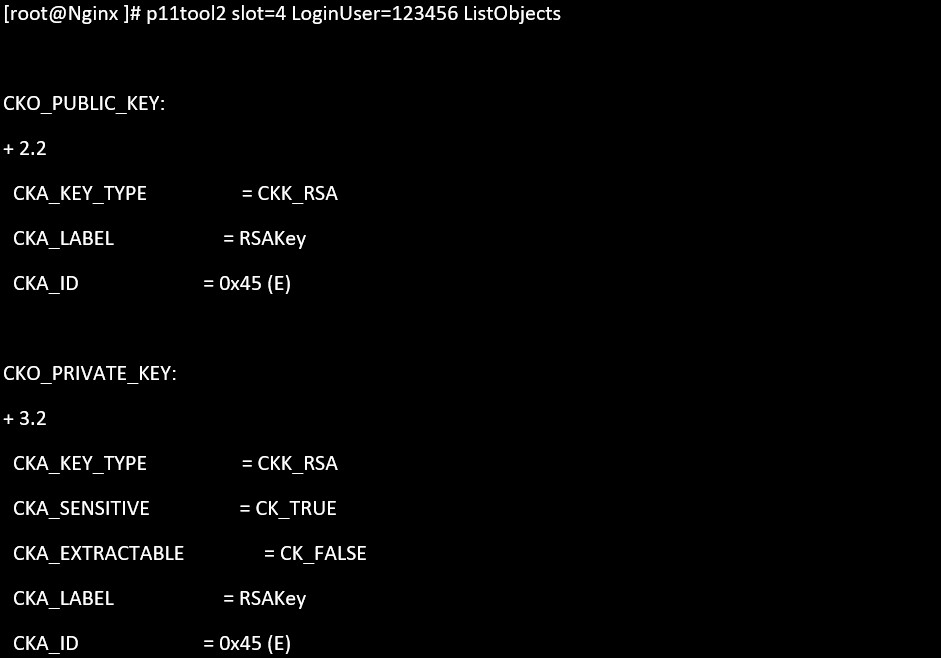
List keys
-
Generate a certificate request.
|
›_ Console |
|---|
|
Here, Nginx is the token label and RSAKey is the key on the HSM. Provide Cryptouser PIN when prompted. Also provide other required information for certificate.
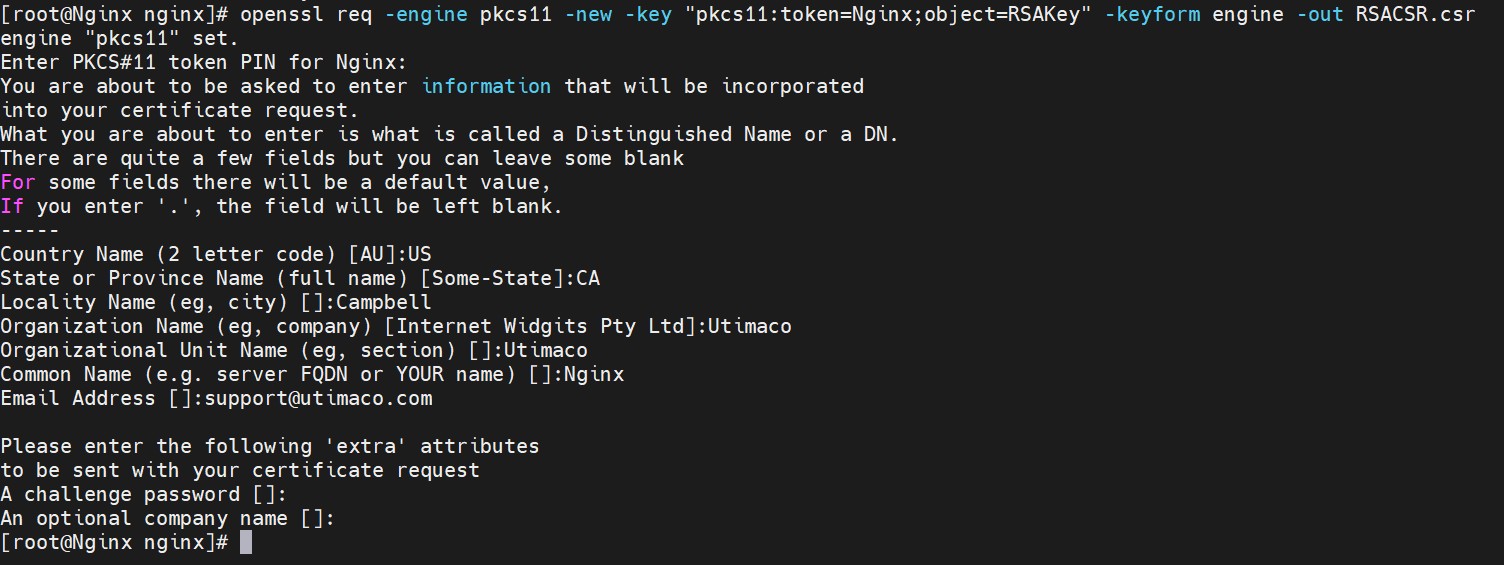
Certificate request output
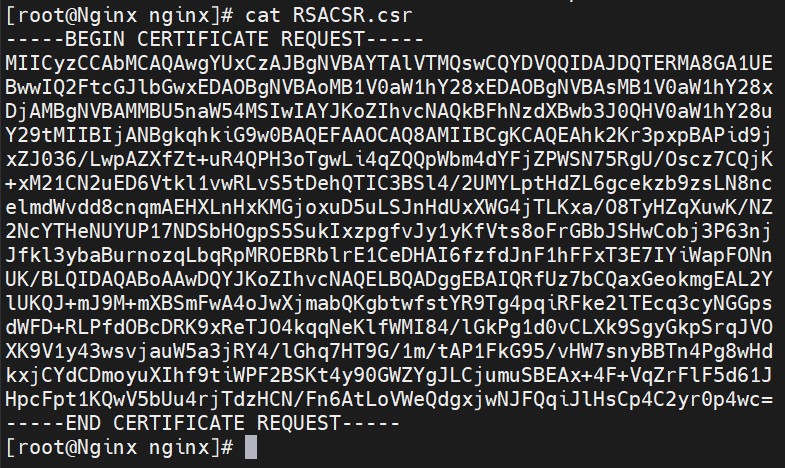
Content of certificate request file
-
Get this CSR signed by your CA and copy the signed certificate to NGINX server.
-
Alternatively, you can create the self-signed certificate based on the generated key.
|
›_ Console |
|---|
|
Here, Nginx is the token label and RSAKey is the key on the HSM. Provide Cryptouser PIN when prompted. Also provide other required information for certificate.
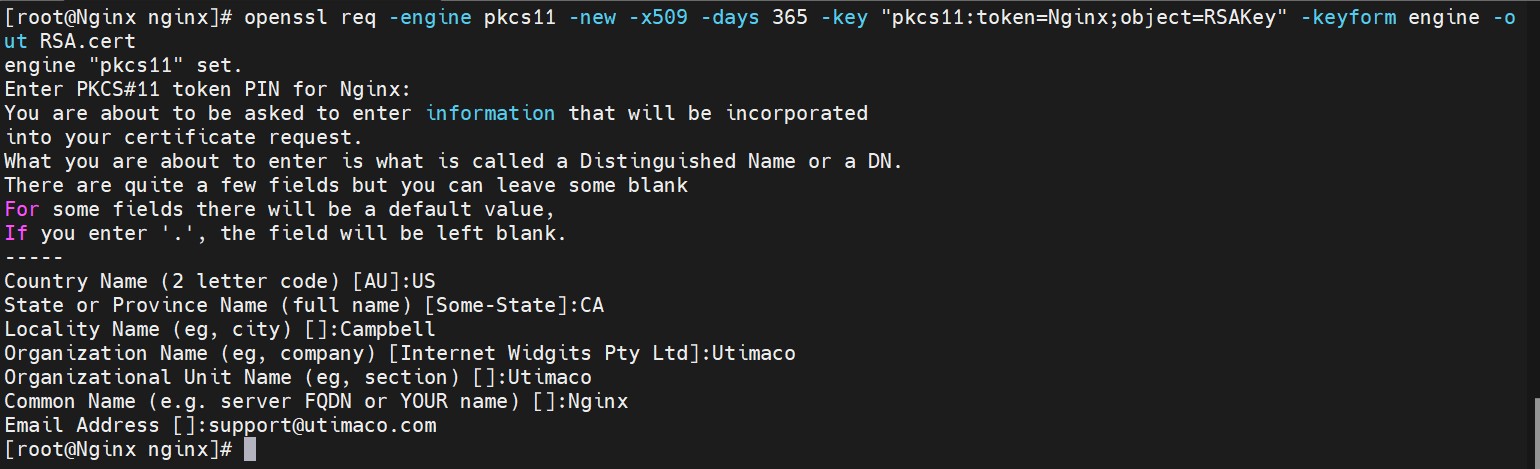
Self-signed certificate generation output
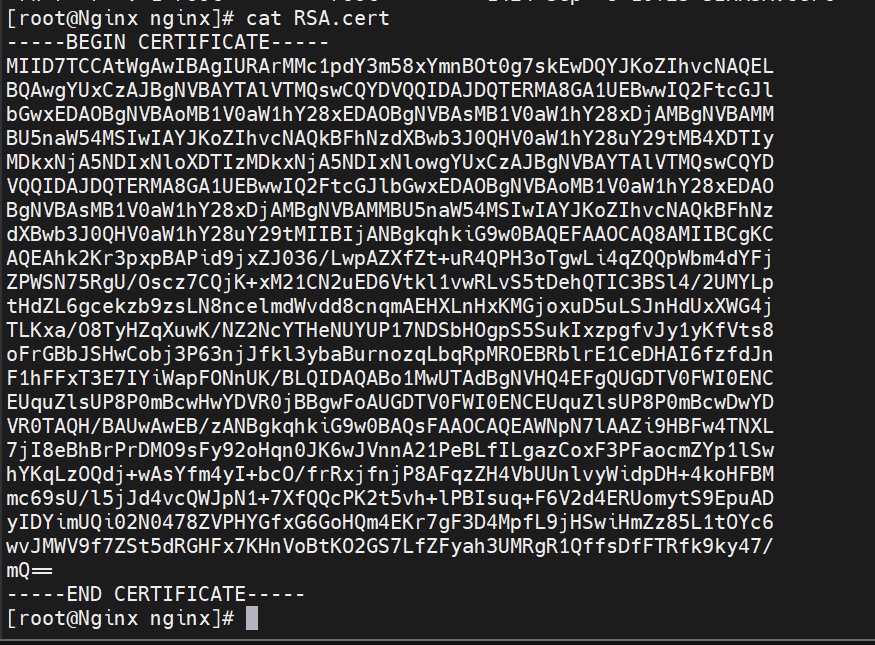
Content of self-signed certificate file
It is recommended to use CA signed certificate for production environment.